
How to Maintain Gutters for Long-Lasting Roof Protection
Gutters are one of those “out of sight, out of mind” parts of a home, until a heavy downpour hits and water starts spilling where it shouldn’t. If you’ve ever wondered how to maintain gutters, it starts with understanding what they’re protecting. When they’re working properly, gutters direct rainwater away from your roofline, walls, foundations and landscaping. When they’re blocked or leaking, that same water can end up in your eaves, ceilings, garden beds and even under slabs at the worst possible time.
In Newcastle, the Central Coast and Lake Macquarie, gutter problems aren’t just about the odd leaf. Coastal rain, storm season, wind-driven debris, salty air and plenty of trees can clog systems fast. Add bushfire season into the mix and dry gutter debris becomes more than a maintenance issue, it can pose a risk to safety.
The cost of ignoring gutters can sneak up on you and can lead to bigger, pricier repairs down the track. The good news? With a simple routine, most homes can stay on top of it.
What Does Gutter Maintenance Actually Involve
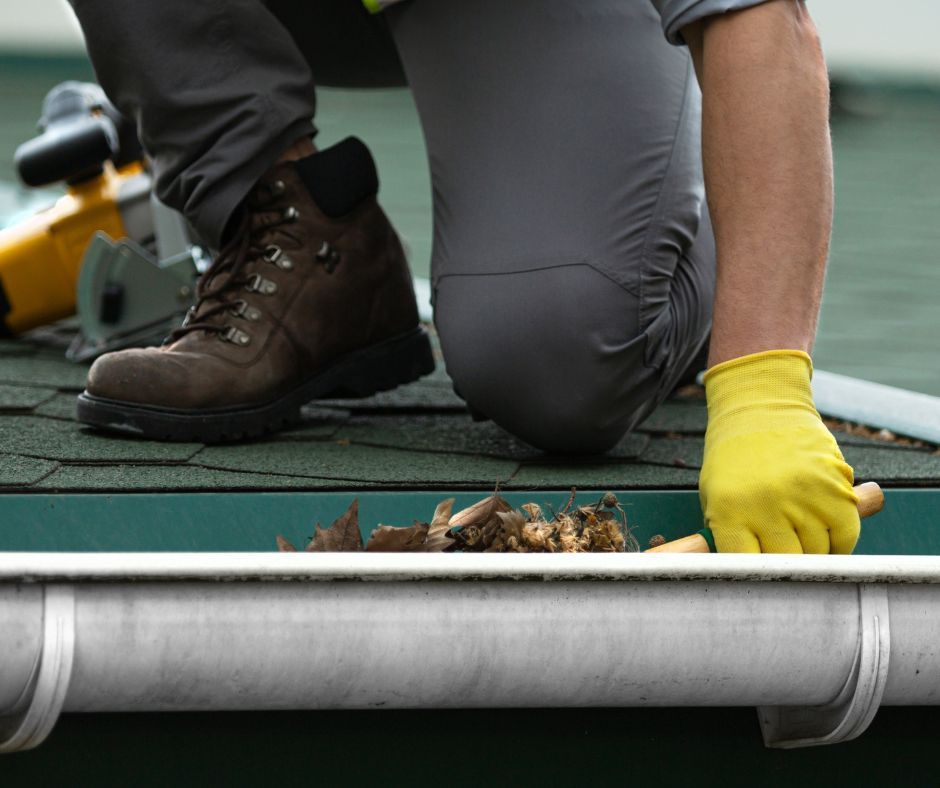
When people say “gutter maintenance,” they often mean “clean the leaves out.” Cleaning is part of it, but proper gutter maintenance is about keeping gutters, downpipes and roof-drainage components clear, secure and watertight. In other words: clean it, check it, fix what’s starting to fail and prevent repeat problems.
Core Gutter Maintenance Tasks
Gutter Cleaning
This is the hands-on removal of leaves, twigs, dirt and the sludge that forms when debris sits wet for weeks. In coastal and leafy areas, that sludge can build up faster than property owners can expect, especially in gutter corners, behind gutter guards and around downpipe outlets.
Gutter and Downpipe Inspections
Inspections are where you catch the “quiet” issues before they become a ceiling stain. You’re looking for:
- Holes, rust spots, cracks and split seams
- Leaking joints and dripping corners
- Blocked downpipes (including partial blockages that only show up during heavy rain)
- Sagging lengths, loose brackets and sections pulling away from fascia
- Poor fall (water pooling in the gutter instead of moving to the downpipe)
- Overflow points where water consistently spills over the front edge
Repairs and Adjustments
Small fixes, done early, can save big gutter replacements later. Common adjustments include patching minor leaks, resealing joints, tightening or replacing fasteners, rehanging sagging sections, and correcting fall so water runs the right way.
Checking Related Roof Elements
Good maintenance also includes a quick scan of:
- Flashings and penetrations (vents, skylights, plumbing points)
- Valleys where debris collects and water concentrates
- Roof tiles or metal sheets for damage that redirects water
- Overhanging branches that constantly feed leaves into the system
If you maintain gutter systems with this “clean + check + fix” mindset, you’re far less likely to get caught out the next time the weather turns.
Why Maintaining Your Gutters Matters
There are several key reasons it pays to maintain guttering, such as:
Protecting Your Roof and Interior
Blocked gutters don’t just overflow, they often backflow. When water can’t move to the downpipe, it spills into the eaves, finds gaps under the roofing and can travel into ceilings and wall cavities.
Avoiding Costly Structural Damage
Overflowing gutters dump water right where you don’t want it, around foundations, pathways, retaining walls and garden edges. Over time, repeated saturation can cause soil movement, erosion and deterioration.
Reducing Bushfire and Pest Risks
In bushfire season, gutters filled with dry leaves and fine debris can become a hazard, particularly if embers land and smoulder in built-up material. Even outside bushfire season, clogged gutters can hold stagnant water and sludge, attracting mosquitoes and insects. Birds and rodents also love sheltered, messy gutter corners for nesting, especially when nearby trees provide easy access.
Extending the Life of Your Roof & Gutters
Moisture drives corrosion in metal gutters and accelerates deterioration in joints and fasteners. Keeping gutters clear reduces rust risk, prevents premature sagging and helps your whole roof-drainage system last longer, particularly in coastal areas where salt air already works against exposed metal.
How Often Should You Maintain Gutters
General Rule of Thumb
For most Australian homes, a solid baseline is twice per year, typically late autumn and spring. Autumn clears the accumulated leaves before winter rain settles in, while spring clears the new growth, seed pods and storm-season debris.
When You May Need More Frequent Maintenance
Some properties need a tighter schedule, including:
- Heavily treed blocks (near bushland, reserves or tall trees that drop leaves and debris constantly)
- Coastal homes where wind-driven debris accumulates and salt exposure can speed up corrosion
- Commercial and complex roofs with larger catchment areas, multiple downpipes, parapets or box gutters that need more than a quick glance
After Severe Weather
Heavy storms, hail and prolonged rain events can clog gutters fast. Even if you cleaned recently, a post-storm check is smart, especially if you’ve got nearby trees, visible roof debris or you notice downpipes struggling to keep up.
Step-by-Step: How to Maintain Gutters Safely
If you’re planning a DIY clean and been looking up for easy-to-follow steps on how to maintain gutters, here’s the safest way to approach it and clear limits on what you should and shouldn’t do yourself.
Safety First
- Use a sturdy ladder on level ground and set it up correctly.
- Never overreach. Move the ladder often.
- Have a second person steady the ladder and keep an eye on what you’re doing.
- Avoid steep or high roofs. Multi-storey work is not a DIY test of courage.
- Keep clear of powerlines and service cables.
- Don’t work in wet, windy or stormy weather.
Tools Checklist
- Ladder
- Gloves + eye protection
- Plastic scoop or small trowel
- Bucket or tarp (for debris)
- Garden hose for flushing
- Optional: leaf blower for the roof surface (used carefully, not blasting grit into the gutter)
- Phone/camera for photos of anything suspicious
Step 1: Clear Roof and Gutter Debris
Start by gently clearing loose leaves and branches from the roof areas that feed into the gutters (only if it’s safe to reach from a ladder. Don’t climb onto a steep roof). Then work in sections:
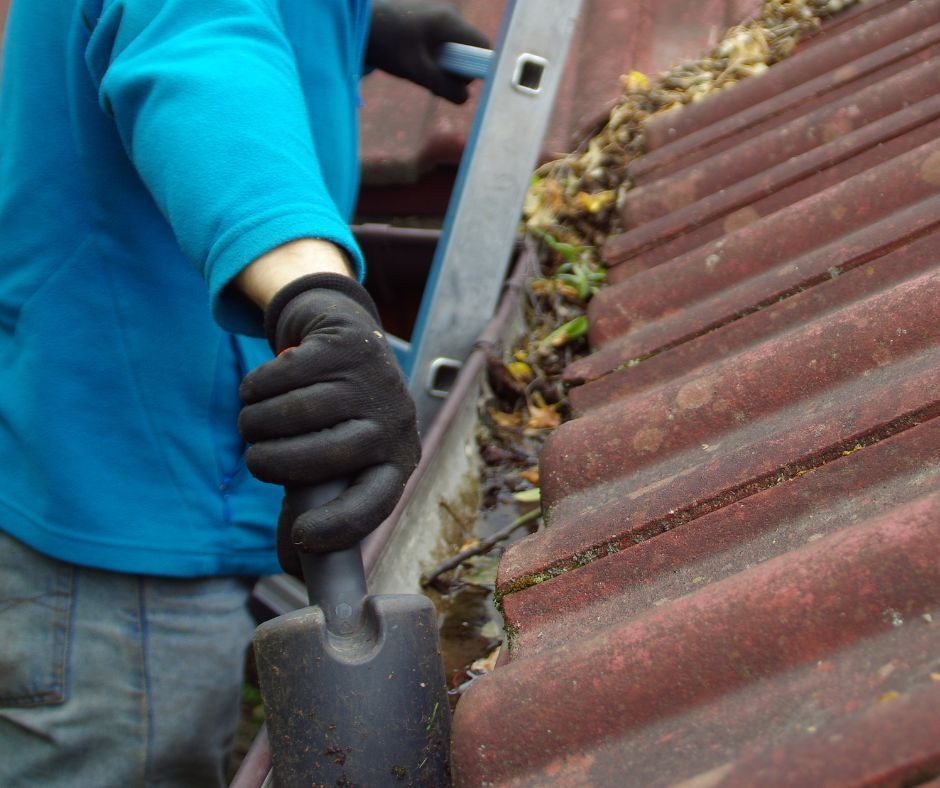
- Scoop debris out of the gutter
- Drop it into a bucket or onto a tarp
- Pay extra attention to corners, joins and around downpipe outlets where sludge builds up
Step 2: Flush Gutters and Downpipes
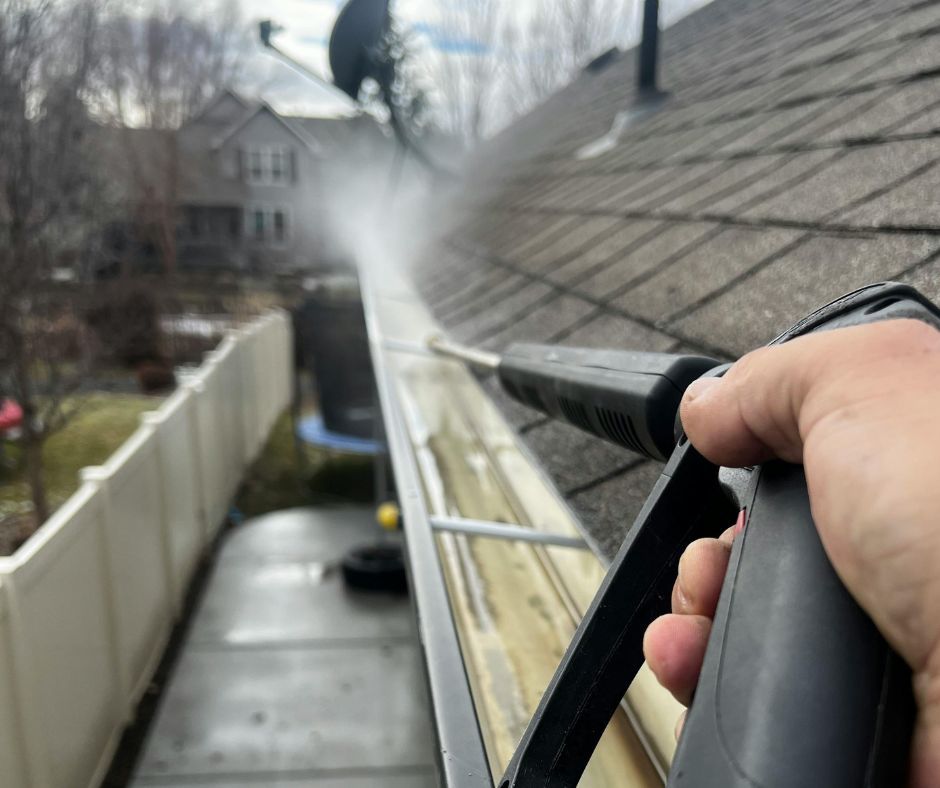
Use a hose to rinse from the end furthest from the downpipe, pushing remaining debris toward the outlet.
- Check each downpipe for strong discharge
- Listen for gurgling or backing-up sounds
- If water rises in the gutter and won’t drain, you’ve likely got a blockage in the downpipe or outlet
Step 3: Check for Obvious Issues
While everything is exposed, scan for:
- Rust spots and pin-holes
- Leaking joints or dripping corners
- Sagging brackets or sections pulling away
- Pooling water that suggests poor slope
- Staining on fascia boards, brickwork or eaves that hints at repeat overflow
Take photos. Even if you’re not sure what you’re seeing, a few clear shots make it easier for a roofer to advise you without guesswork.
Step 4: Basic Maintenance You Can Do Yourself
If access is safe and the issue is genuinely minor, you may be able to:
- Tighten accessible loose screws on brackets
- Re-seal small, accessible pin-holes or joints with an appropriate sealant (always follow the manufacturer’s instructions and curing times)
- Replace simple, easy-to-reach components like a damaged plastic outlet (only if it’s safely accessible and you’re confident)
If, at any point, you realise it’s bigger than a simple clean (like persistent leaks, repeated blockages, sagging lengths or tricky access), stop there. That’s the point where calling a professional like
Adapt Roofing is the smarter and safer move.
Gutter Maintenance Tips by Property Type
Different buildings need different approaches, mainly because access, roof design and drainage complexity vary.
Single-Storey Homes
These are often the most DIY-friendly, provided you’ve got safe ladder access and stable ground. A good routine is:
- Regular cleaning in autumn and spring
- A quick post-storm visual check
- An annual professional inspection to catch fall issues, hidden leaks, and corrosion early
Multi-Storey Homes and Steep Roofs
This is where DIY becomes risky. Height, awkward ladder placement and steep pitches are a bad combination. Professional roofers can use harnesses, scaffolding and specialised equipment to access gutters safely, without the shortcuts that cause accidents.
Units, Strata and Commercial Buildings
Larger roof areas and complex drainage systems (box gutters, parapets, multiple outlets, internal downpipes) need scheduled maintenance. Regular plans also help with insurance expectations and reduce the chances of major disruptions from preventable leaks.
When to DIY and When to Call in a Professional Roofer
Here’s the simplest way to draw the line: DIY is for straightforward cleaning when it’s safe. Professional help is for anything involving height, complexity or repairs that affect roof drainage performance.
Suitable for DIY
- Single-storey properties with safe ladder access
- Light debris and straightforward gutter runs
- Confident homeowners with a support person, PPE and the right tools
- A basic clean and flush
Best Left to the Professionals
- Multi-storey homes or steep roofs
- Gutters close to powerlines
- Box gutters or complex commercial drainage
- Ongoing leaks, sagging gutters or suspected structural damage
- Repeated blockages even after regular cleaning
- Any situation where you can’t safely inspect joints, falls and outlets
This is also where maintaining your gutters becomes more than a weekend task, because the real “win” is solving the cause, not just removing the visible dirt and debris accumulation.
How Adapt Roofing Helps Keep Gutters in Top Shape
If you’d rather hand the job to someone who does it safely, efficiently and properly, Adapt Roofing can help. We’re a family-owned Central Coast roofing team with 25+ years’ experience, working across residential and commercial properties.
Our gutter-related services include:
We service Newcastle, Central Coast and Lake Macquarie, and we focus on solid workmanship, quality materials and the kind of service you actually want from a local roofing team: clear advice, practical solutions and honest communication.
Conclusion
Regular gutter maintenance is one of the simplest ways to protect your property from costly damage, especially in coastal, leafy, storm-prone parts of NSW. A clean, free-flowing gutter system helps protect your roofline, your interior and the foundations that keep everything stable.
If you want to know how to maintain gutters the right way, use the DIY checklist above for basic cleaning and flushing only if it’s safe for you to do so. If you’ve noticed any of the warning signs (overflow, sagging, rust, stains, leaks or repeat blockages), book a professional inspection to prevent further damage.
Need a hand across Newcastle, the Central Coast or Lake Macquarie? Contact Adapt Roofing for gutter inspections, repairs and full replacement solutions, done safely and built to handle real local conditions.
Key Takeaways
- Regular gutter maintenance (at least twice a year) prevents leaks, structural damage and expensive repairs.
- Safe DIY cleaning is possible for some homes, but height, complexity and ongoing issues are clear signs to call a professional.
- Watch for warning signs like overflow, sagging, rust and stains. They usually mean your gutters need repair or replacement.
- Preventative upgrades like gutter mesh, correct falls and regular inspections make gutters easier to maintain and last longer.
- Adapt Roofing can handle everything from simple gutter repairs to full roof and gutter upgrades across the Central Coast, Newcastle and Lake Macquarie.
Frequently Asked Questions
How often should I clean my gutters on the Central Coast?
A good baseline is twice per year(late autumn or spring), then add a check after big storms. If your home is surrounded by trees or you’re getting wind-blown debris, you may need to clean more often.
What happens if I don’t maintain my gutters?
Blocked or leaking gutters can cause overflow into eaves and roof spaces, damp and mould, rotting fascia, rusted gutters, stained exterior walls and water pooling around foundations. The longer it’s left, the more expensive it usually gets.
Is it safe to clean my gutters myself?
It can be, if it’s a single-storey home with stable ladder placement, dry weather and you have someone to guard the ladder. If it’s double-storey, steep, slippery or near powerlines, it’s far safer to call a professional.
Do gutter guards mean I’ll never have to clean my gutters again?
No. Guards can reduce debris build-up, but they still need inspection and occasional cleaning. Fine debris and sludge can still accumulate, and outlets can still be blocked.
How do I know if my gutters need repairing or replacing?
Signs include visible rust, cracking, holes, sagging sections, leaking joins, water staining, repeated overflow and gutters pulling away from the fascia. A professional inspection can confirm whether a repair is enough or replacement is the smarter long-term option.
Can clogged gutters cause roof leaks?
Yes. When water can’t flow to the downpipe, it can back up into eaves and under roofing edges, leading to leaks and internal damage, especially during prolonged rain.
What’s the best time of year to maintain gutters in NSW?
Late autumn and spring are ideal for most homes. Autumn clears leaf fall ahead of winter rain, while spring clears new growth and storm-season debris.
Who is responsible for gutter maintenance in a strata or commercial building?
It depends on your strata by-laws, lease and maintenance agreements. In many cases, the owners corporation arranges scheduled maintenance for shared roof and drainage systems, but responsibilities can vary, check your documentation to be sure.
How much does professional gutter maintenance or replacement cost?
Gutter repair or replacement costs vary based on height, access, gutter length, condition and complexity (including downpipes and box gutters). The best approach is a site inspection and a clear quote based on what your property actually needs.
Does Adapt Roofing offer gutter maintenance in my area?
Adapt Roofing services Newcastle, the Central Coast and Lake Macquarie. If you’re unsure, reach out with your suburb and property type and our team can point you in the right direction.